The Power Of Worship Pads: Enhancing Your Worship When The Guitar Is Your Only Instrument
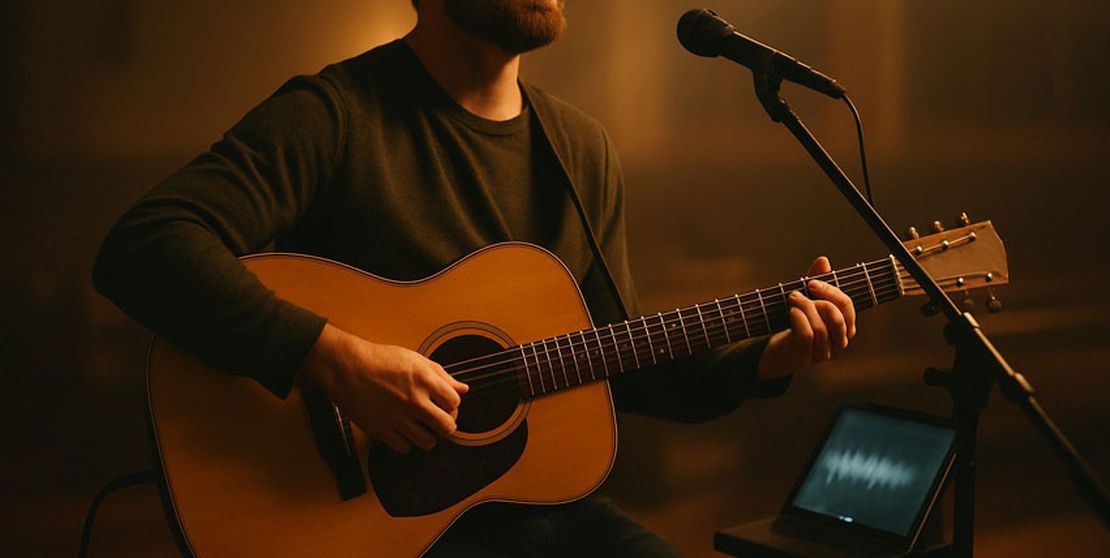
I love leading worship with just my acoustic guitar. There’s an intimacy to it that a full band can’t quite reach. But anyone who’s actually stood at the front of a room with just six strings and a microphone knows the other side of that - the silence between songs feels enormous, the guitar can sound thin in a big space, and you spend half the set worrying you’re not filling the room well enough.
For a long time I just lived with it. Then somebody put on a pad track underneath me during practice one night, and the whole room felt different. That’s what this post is about.
What’s a worship pad, exactly?
If the term is new to you, don’t worry - I had no clue what people meant either at first.
A pad is just a sustained, ambient soundscape. Soft strings, warm synths, the kind of thing you don’t really notice on its own but immediately miss when it’s gone. It sits underneath everything else and gives the music a floor to rest on. Your guitar isn’t floating in empty air anymore; it’s surrounded by something.
The best part for solo guitarists: pads do the job a band would normally do, without needing a band. No extra musician to recruit, no rehearsal logistics. Just a track running quietly through the PA.
What actually changes when you use them
The first Sunday I used pads, three things hit me right away.
The room felt warmer. Not “louder” - warmer. People closed their eyes, leaned in, and the awkward space between songs vanished because the pad just kept going. I wasn’t scrambling to fill silence anymore.
I sang better. Knowing there was something holding the bottom of the sound meant I could pull back, leave space, even stop playing for a bit during a prayer - and the music kept moving. The exposure I usually felt as a solo player just wasn’t there.
The congregation engaged differently. Hands went up, eyes closed, people lingered on the last notes instead of waiting for the next song to start. None of that was about me. The pads created room for the moment to land.
How I actually run pads (and what I tried first)
When I started looking into this, I went down a rabbit hole of worship pad apps. Some are gorgeous. Some are clever. A few cost real money.
After a couple of in-service near-disasters - an app freezing during a quiet moment, a tablet deciding to restart for an update right before the offering - I quietly went back to something almost embarrassingly simple: MP3 files played through VLC.
That’s it. That’s the setup.
Here’s why I keep coming back to it:
- MP3s don’t crash. They’re just files. Any computer or phone can play them. No subscription, no login, no surprise update.
- VLC is already on every church laptop, or one download away. It’s free, it’s solid, and it handles crossfades cleanly.
- It works offline. Church Wi-Fi has betrayed me too many times.
- Any volunteer can run it. I’ve trained a teenager to operate it in about five minutes.
If you want VLC to crossfade smoothly between tracks: Tools → Preferences → Show All Settings → Audio → Filters → check Crossfader, then set it to about 3-5 seconds. Done.
The fancy pad apps are great for people who love fancy pad apps. I’ve stopped fighting that fight.
Where to get pads (free)
These are the three I keep coming back to. All free, all in standard keys, all good quality.
Juan López Música - solid, warm pads in every common worship key.
Download: Free Worship Ambient Pads
Churchfront - clean, modern sound. Email signup required.
Download: Churchfront Ambient Pads
Reawaken Worship Pads & Karl Verkade - gorgeous, atmospheric, a little more textured.
Downloads: Reawaken Worship Pads · Karl Verkade - Bridge Ambient Pads III
For a solo guitar setup, you really only need pads in five keys to cover almost everything you’ll ever play: C, G, D, A, F. Start there. Add more later if you need them.
Getting started without overcomplicating it
You don’t need a sound engineer’s checklist for this. You need three things.
A song list with keys written next to each song. Hand it to whoever’s running the pads before the service starts. That’s the whole “set list management” piece.
A volume you both agree on at sound check. Pads should sit just below your guitar - there but not announcing themselves. If anyone in the room can clearly identify “the synth track,” it’s too loud. The goal is that they feel something fuller without being able to say exactly what changed.
A way to communicate during the service. A nod, a hand signal, eye contact with the booth. That’s it. No need for in-ears or fancy comms.
A few things I learned the hard way
Don’t make the pads the show. They’re scenery. The moment people start noticing them as a sound, they’re working against you.
Always double-check the key. A pad in the wrong key is immediately obvious and painful. I’ve done it. The whole room winces with you.
Practice with them at home first. Run a pad in the background while you play through your set. Get used to the feel of leaning on it - and the feel of dropping out completely and letting it carry the moment.
Keep your media volunteer out of options. The fewer buttons and decisions they have during a service, the better. A folder of pads named by key, VLC open, done.
A few notes on technique
Once you trust the pad to hold the room, your guitar playing can actually get simpler. You don’t have to strum hard the whole song just to keep the energy up. Try this:
- Verses: play softly, even partial chords. Let the pad do most of the work.
- Choruses: lean in with fuller strumming. You’ll feel the lift.
- Prayer or reflective moments: stop playing entirely. The pad will carry it beautifully.
- Between songs in the same key: don’t stop the pad. Let it bridge.
The change in dynamics - quiet, then full, then quiet again - is what makes a set feel like worship instead of a setlist.
A last thought
I waited way too long to try this. If you’ve ever stood up there with a guitar and felt like something was missing, it probably wasn’t your playing. It was the space.
Pads fill that space without taking it over. The point isn’t to sound more professional, or more like the album. The point is to give yourself - and the people you’re leading - a little more room to breathe and worship.
Start simple. One pad, one key, one Sunday. See what happens.
Share